How AI-Powered Education Uncovers Hidden Student Risk Signals
Date
June 11th, 2026
Reading Time
7 mins
Tags cloud
What's news
Introduction
As digital tools multiply across classrooms and operations teams, student data has become like a large picture broken into countless fragments scattered across disconnected systems. This makes it incredibly hard for education organizations to see the full picture of hidden student risk signals, ang therefore, they have not yet been able to transform this large amount of data into valuable insights.
That's exactly why AI-Powered Education is becoming one of the most important directions in EdTech today. When data is properly connected, cleaned, and analyzed, AI can help education organizations detect hidden student risk signals earlier, support stronger student retention, and create a more proactive learning experience for every individual learner.
1. Fragmented Data Makes Hidden Student Risk Signals Hard to See
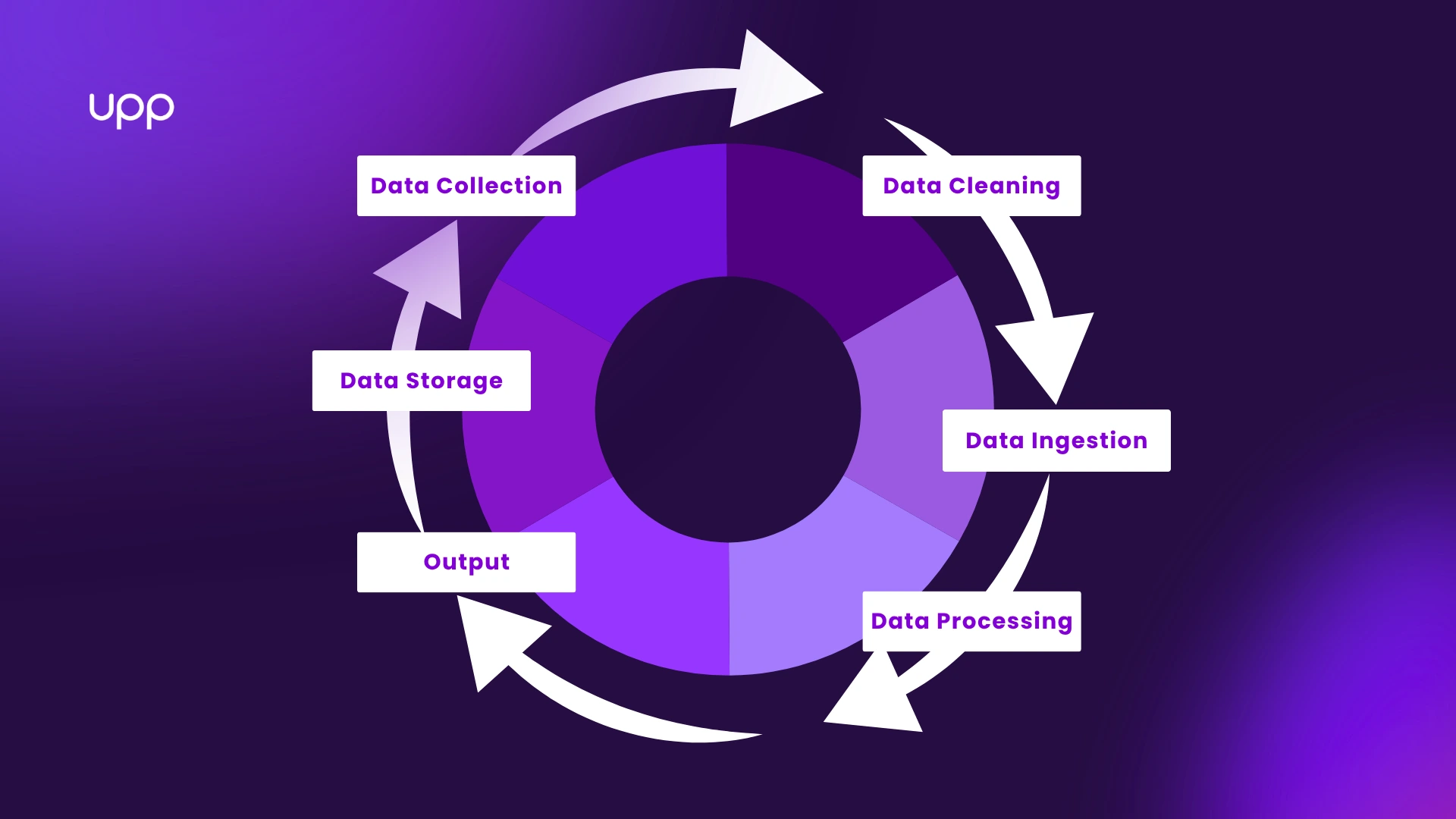
The first challenge is data fragmentation. Most education institutions are running a whole stack of separate tools to handle different operational needs such as attendance systems, competency assessment platforms, learning outcome trackers, LMS, CRM, email, chatbots, survey forms, and internal files stored without any real structure. Data from these tools is usually not live-connected within one unified system. Instead, teams often need to wait for manual updates before they can generate the necessary reports on learners. This creates many disconnected pieces of information rather than a unified picture of the learning journey.
This leads to student success teams struggle to monitor, support, and respond to learners in a timely manner. Take this scenario: A learner whose grades are declining, who participates less in class, and who no longer responds to their mentor. That student may be on the verge of dropping out. However, if these three signals are stored across three different systems, the educational institution can easily miss the right moment to intervene.
Therefore, the first step in building a strong foundation for an AI solution is to establish a reliable data infrastructure. Data becomes usable for AI when it goes through essential steps such as big data processing, data structure standardization, data cleaning, duplicate data removal, and integration across multiple sources. When input data is clean, complete, and consistent, AI-Powered Education can generate more reliable insights.
2. Clean Data Needs a Strong Management System to Become Actionable
Once your data is clean and standardized, the next challenge is managing it inside a system powerful enough to make retrieval, aggregation, and analysis easier. Because here's the thing, clean data doesn't create value on its own if it's still sitting in scattered files or systems that lack real-time visibility.
This is where Salesforce comes in as a critical management layer for schools and education organizations. Through its education CRM approach, Salesforce brings together data points that typically live in silos, such as attendance records, learning outcomes, advising history, enrollment status, student interactions, and engagement metrics - all into one unified platform.
Dashboards are another essential piece of this data management layer. Student success officers and leadership teams can use them to monitor learning trends, participation rates, cohorts showing signs of disengagement, and key metrics that influence retention. When data is clearly visualized, decision-making becomes less dependent on intuition and more grounded in evidence and operational visibility
This is an important foundation for AI-Powered Education to work more effectively. A strong management system does more than store data. It helps make data easier to understand, easier to monitor, and ready for the next layers of intelligent analysis.
3. AI Helps Detect Hidden Student Risk Signals Earlier
When data is connected, cleaned, and managed within the right system, AI can begin to detect hidden student risk signals that are difficult for people to see when looking at each metric separately. AI does not only look at a single data point. It analyzes multiple patterns at the same time to identify potential risks in learning behavior.
For example, a learner may still have strong grades, but their attendance is gradually declining. A student may continue logging into the LMS, but their time spent engaging with learning materials has dropped significantly. An online learner may start a course, but repeatedly miss deadlines, stop responding to support messages, and participate less in assessments. Individually, these signals may not seem serious enough. However, when they are connected, they can reveal that disengagement is starting to form.
AI can help classify risk levels, predict when learners may need support, and suggest suitable actions for different student groups. In more advanced operating models, AI agents for education can support the monitoring of academic performance and engagement patterns, while automatically triggering the next actions in the workflow. This is an important step forward in AI for education workflow, where AI does not only analyze data but also helps educational organizations act faster.
AI-powered chatbots for higher education institutions can become the first support touchpoint in the learning journey. They can help learners check class schedules, receive deadline reminders, understand administrative processes, or submit support requests when they face difficulties. However, the value of chatbots does not only come from automated responses. Their real value also lies in capturing these interactions as important data points that can help identify early signs of declining engagemen
From a broader perspective, the evolution of AI in education – agentic workflows shows that AI in education is evolving from individual support tools into more intelligent workflows. When chatbots, learning data, CRM systems, dashboards, and AI agents are connected, educational institutions can not only detect risks but also trigger appropriate actions, refer the right cases to the right department, and provide more timely support to learners.
4. How UPP’s Solution Helps Uncover Hidden Student Risk Signals Earlier
To effectively detect hidden student risk signals, education organizations can't simply plug in an AI tool at the end of their existing process. AI needs good data. Good data needs a solid management system. And that system needs to be properly integrated with how operations actually run day to day. That's exactly why UPP positions its value around end-to-end solutions.
UPP can partner with educational institutions from the stage of assessing the current data system, identifying where the data is located, which data is duplicated, which data lacks normalization, and which systems need to be integrated. Then, UPP can support the design of data architecture, data integration, data cleaning, and building a data foundation ready for AI analysis.
On the software side, UPP can implement Salesforce or the right management platform to help schools and education organizations centralize their data, manage learner interactions, build dashboards, and give every relevant team the operational visibility they need. This is the step that takes data from "connected" to "actually useful in daily operations."
When it comes to AI, UPP can develop AI models, AI agents, or intelligent workflows to analyze risk signals, prioritize data, and suggest appropriate actions. Instead of working with multiple outsourced providers offering individual data, CRM, dashboard, and AI services, educational organizations can choose UPP as a technology partner throughout the entire process.
UPP's unique selling proposition lies not only in its software development capabilities. UPP's USP is its ability to understand educational challenges, process data, implement systems, integrate Salesforce, and develop AI in an end-to-end model. This reduces the risk of deployment disruptions, ensures seamless data connectivity, and helps AI-Powered Education generate more accurate insights.
5. Why AI-Powered Education Matters for Retention and Learner Experience
AI-Powered Education is more than just a story about data analytics technology. Its greater value lies in its ability to help educational institutions improve student retention, enhance learner experience, and build a more proactive learning ecosystem. When risk signals are detected early, student success teams can prioritize support for specific cases instead of treating every issue the same way.
The trend of AI in education news in Australia also shows that many education markets are increasingly interested in applying AI to support teaching, personalize learning experiences, and improve operational efficiency. This reflects a major shift in the thinking of the education industry: AI should not be seen merely as a content creation tool, but should be placed within appropriate data systems, processes, and governance.
Conclusion
The signs of potential risk in students aren't always immediately apparent. They often subtly emerge through learning behavior, interaction patterns, learning outcomes, and support interactions before becoming a larger challenge in student retention.
Therefore, AI-Powered Education should not only be seen as a technological upgrade, but also as a smarter approach for educational institutions to understand learners earlier and support them more effectively. With the right solution, organizations can move from fragmented observation to timely, data-driven action.
For education, the top priority is transforming existing data into meaningful information that ensures each learner receives the right support at the right time.
Tags cloud
Newsletter
DISCOVER MORE













































![[Recap] UPP Global Technology JSC Establishing Anniversary](/homepage/news-section/new-4.webp)



























LET’S TALK...
Content delivered to your inbox


ENTER YOUR EMAIL
YOU WANT TO...


Hanoi, Vietnam
Web3 Tower, No. 15, Alley 4, Duy Tan, Cau Giay, Hanoi, Vietnam