UPP News: What's new in the AI field? (Part 17)
Date
March 14th, 2025
Reading Time
10 mins
Tags cloud
What's news
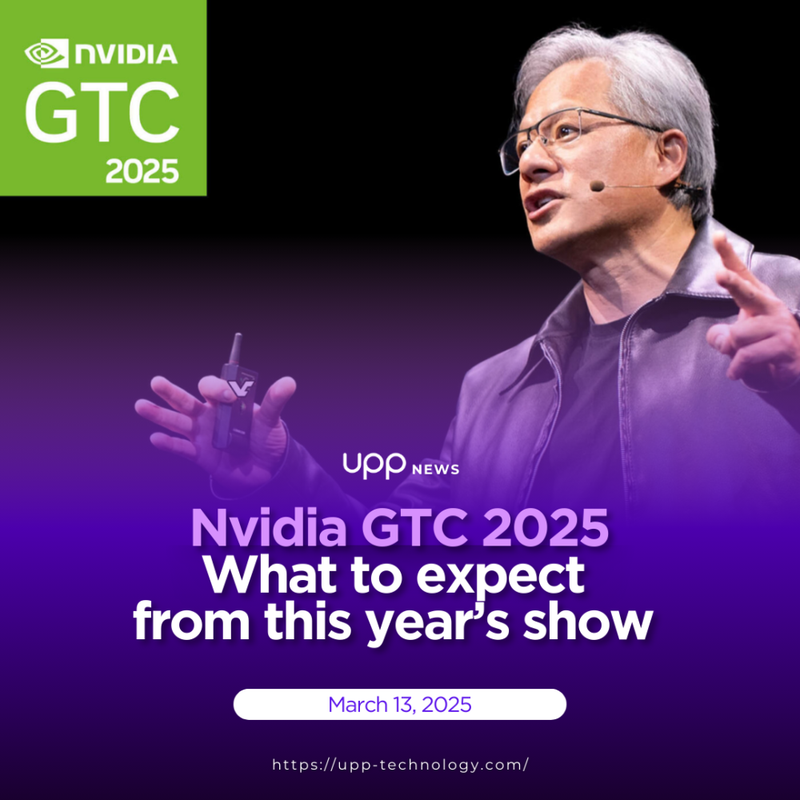
1. Nvidia GTC 2025: What to expect from this year’s show.
Nvidia’s GTC 2025 runs Monday to Friday in San Jose, with CEO Jensen Huang’s keynote on Tuesday. The event features AI, robotics, sovereign AI, and automotive advancements, plus 1,000 sessions and 400 exhibitors.
Key highlights include the Blackwell Ultra GPU, an upgraded B300 series with 288GB memory, and a preview of Rubin, Nvidia’s next-gen GPUs for 2026. The company will also host a "quantum day" on quantum computing.
Nvidia faces challenges like Blackwell overheating issues, export restrictions, and competition from DeepSeek but remains dominant with 82% GPU market share and record $39.3 billion revenue last quarter.
2. Google DeepMind unveils new AI models for controlling robots.
Google DeepMind has introduced new AI models designed to improve robotic control, pushing the boundaries of machine learning in automation and robotics. These models aim to enhance how robots interact with real-world environments by improving adaptability, precision, and efficiency in performing complex tasks.
Meanwhile, Nvidia’s GTC 2025 is taking place from Monday to Friday in San Jose, showcasing cutting-edge advancements in AI, robotics, and automotive technology. The event highlights major innovations, including the unveiling of the Blackwell Ultra GPU and the announcement of Rubin GPUs set for release in 2026. Additionally, Nvidia is emphasizing its growing focus on quantum computing, further solidifying its leadership in high-performance computing and AI acceleration.
Despite facing challenges such as overheating concerns and increasing competition from rivals, Nvidia continues to dominate the GPU market. With an impressive 82% market share and record-breaking revenue, the company remains at the forefront of AI hardware development, shaping the future of computing and artificial intelligence.
3. Snap introduces AI Video Lenses powered by its in-house generative model.
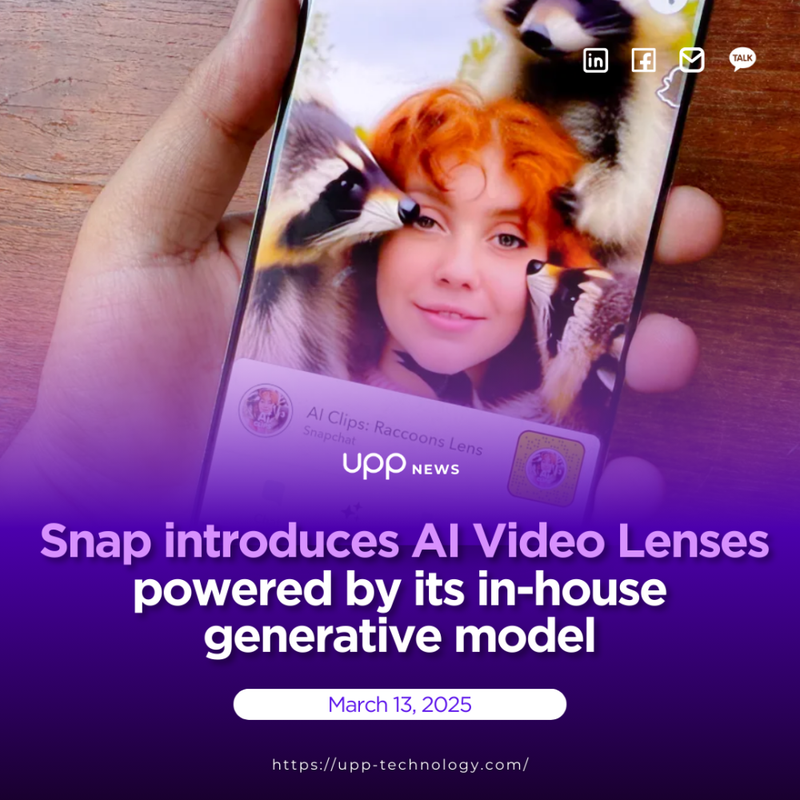
Snapchat is launching its first AI Video Lenses, powered by its in-house generative video model, exclusively for Snapchat Platinum subscribers at $15.99 per month. The initial three Lenses—Raccoon, Fox, and Spring Flowers—add animated effects and zoom-out transitions.
Snap has long led in AR and is now investing in AI to stay competitive against Instagram and TikTok. It plans to release new AI Video Lenses weekly. While Snap has used OpenAI and Google’s tools before, it is now focusing on building its own AI models to reduce costs and enhance user experience.
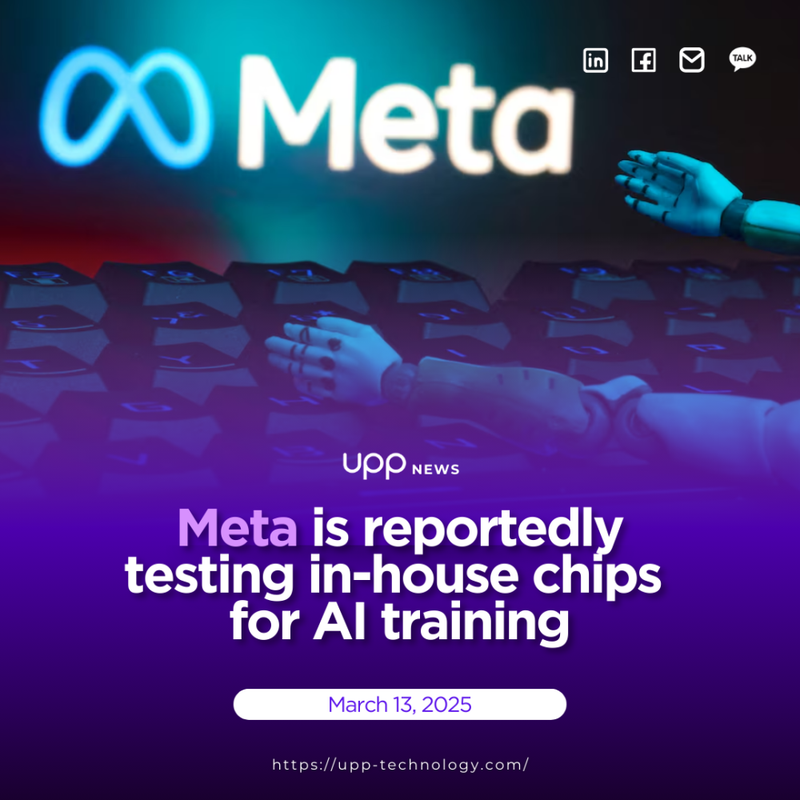
4. Meta is reportedly testing in-house chips for AI training.
Meta is reportedly testing an in-house AI training chip in an effort to reduce its dependence on Nvidia’s hardware. Developed in collaboration with TSMC, the chip is currently in a limited trial phase, with the potential for larger-scale production if successful. Unlike Meta’s earlier AI chips, which were focused on running models, this new chip is specifically designed for training AI, a crucial step in developing more advanced and efficient machine learning systems.
Despite this initiative, Meta is still heavily invested in Nvidia’s GPUs, with plans to spend around $65 billion on capital expenditures this year, primarily on AI infrastructure. If the in-house chip proves effective, it could help Meta lower costs and gain more control over its AI hardware, reducing reliance on external suppliers and strengthening its long-term AI strategy.
5. OpenAI launches new tools to help businesses build AI agents.
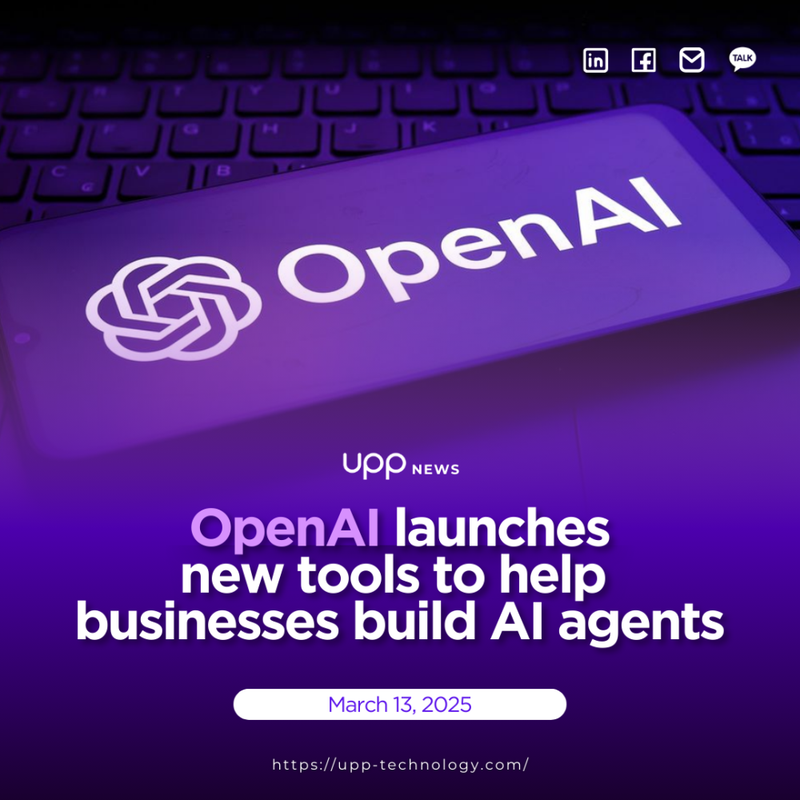
OpenAI has launched the Responses API, allowing developers to build AI agents capable of web searches, file scanning, and automating tasks. This replaces the Assistants API, which will be discontinued by 2026. The API uses GPT-4o search models, claiming high factual accuracy, and includes a Computer-Using Agent (CUA) for automating computer tasks.
OpenAI also released the Agents SDK, an open-source toolkit for integration and monitoring. Despite challenges like AI hallucinations and reliability issues, OpenAI aims to push AI agents from demos to real-world applications, with CEO Sam Altman predicting 2025 as the "year of the AI agent."
Tags cloud
Newsletter
DISCOVER MORE













































![[Recap] UPP Global Technology JSC Establishing Anniversary](/homepage/news-section/new-4.webp)




























LET’S TALK...
Content delivered to your inbox


ENTER YOUR EMAIL
YOU WANT TO...


Hanoi, Vietnam
Web3 Tower, No. 15, Alley 4, Duy Tan, Cau Giay, Hanoi, Vietnam