
The Inevitable Obsolescence of Pure LLMs
Date
March 20th, 2026
Reading Time
7 mins
Why the future of AI does not belong to language-only systems
Pure LLMs are becoming obsolete because they succeeded.
They succeeded so thoroughly at language generation that they exposed the boundary of what language alone can do. A model can answer questions, draft reports, generate code, and still remain fundamentally detached from the world it describes. Fluency turned out to be powerful, but not sufficient. The closer AI gets to real work, real environments, and real consequences, the more visible that limitation becomes.
The next frontier in AI is the construction of systems that can connect language to perception, planning, action, and feedback. In other words, the future belongs less to models that can speak well, and more to systems that can operate responsibly in the world.
This article advances a simple argument: pure LLMs will become insufficient. In high-value AI systems, the language model will increasingly function as one component within a broader architecture, rather than as the complete system itself.
The Ceiling of Pure LLMs
One of the most important arguments about the limits of language models was articulated by Bender and Koller (2020) in Climbing towards NLU: On Meaning, Form, and Understanding in the Age of Data [1]. Their central claim is that if a system only has access to the form of language, namely its structure and statistical patterns, then we cannot automatically conclude that it has access to meaning, understood as the relationship between language and the world.
Language serves as a bridge between words and things, but the existence of things does not depend on the language used to describe them. An object remains what it is regardless of whether it is called an “apple,” a “pomme,” or a “trái táo.”
From this perspective, an LLM may learn extremely sophisticated relationships among words, phrases, and contexts without ever directly connecting those patterns to physical objects, real events, or causal structures in the world. It may become remarkably good at predicting the next token while still lacking any grounded relation to what those tokens refer to.
A well-known illustration is the sentence:
“The apple does not fit in the pocket because it is too small.”
Resolving what “it” refers to cannot be done through syntax alone. Doing so requires background knowledge about the world: a pocket can be too small to contain an apple, whereas an apple being too small is not what would prevent it from fitting. This is a problem that depends on real-world understanding.
This is why claims that LLMs “understand” language depend heavily on what one means by understanding. If understanding means modeling linguistic structure with very high accuracy, then LLMs have clearly achieved something remarkable. But if understanding includes anchoring language to the world, testing assumptions through action, and updating internal models based on consequences, then pure LLMs still face a substantial gap.
From Language to Grounding
If form alone is not enough, what is missing?
Bisk et al. (2020) [2] offer an influential answer: experience. On this view, language does not stand on its own. It must be grounded in perception, action, and interaction with an environment. The authors propose a framework called World Scope, which describes five levels of grounding:
-
WS1 – Corpus: language as static text
-
WS2 – Internet: language as reflected in the massive textual knowledge available online
-
WS3 – Perception: language grounded in sensory signals such as images and sound
-
WS4 – Embodiment: systems can act in an environment and experience consequences
-
WS5 – Social: meaning is co-constructed through social interaction
Today’s pure LLMs dominate WS1 and demonstrate substantial strength in WS2. Many multimodal systems are now extending into WS3, where language is linked to images, speech, video, and other perceptual inputs. The more consequential transition, however, occurs at WS4: AI no longer only describes the world, but begins to act within it.
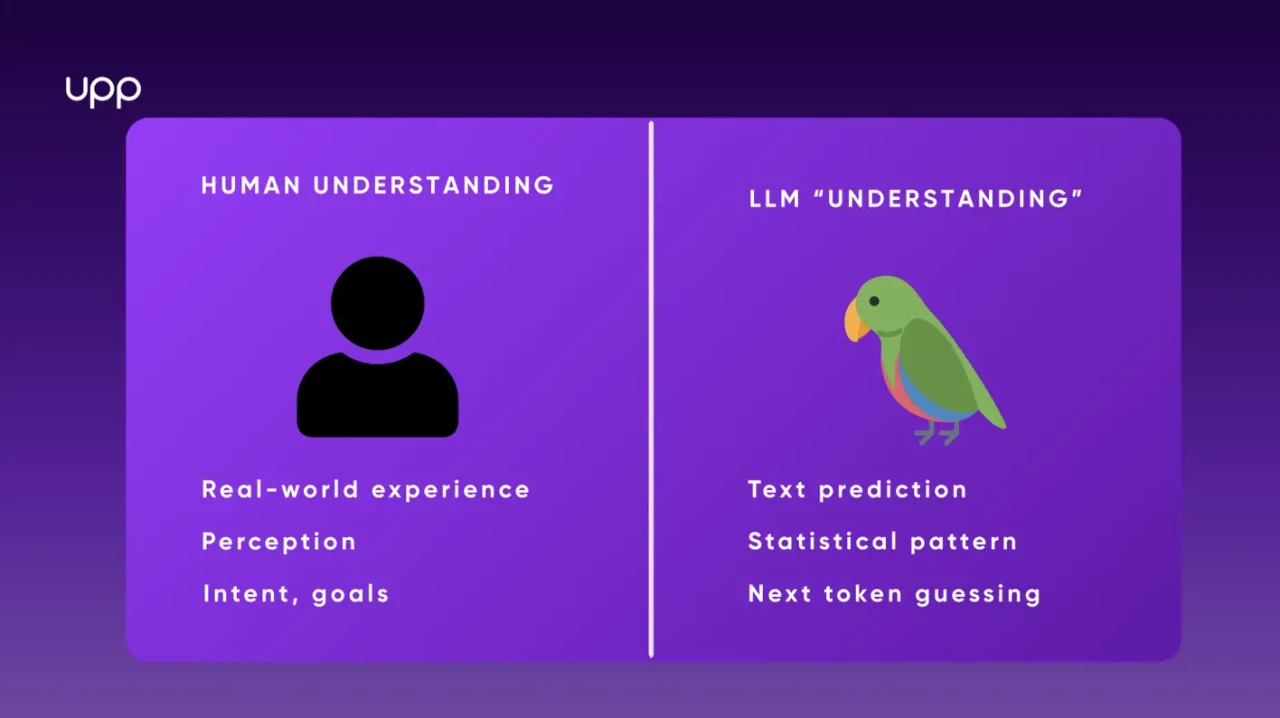
The distinction between WS3 and WS4 is the distinction between observation and experience.
At WS3, a system may learn that apples usually fall downward rather than float upward. At WS4, the system is not merely told that rule through data. It can act, make mistakes, observe outcomes, and update its behavior based on environmental feedback. In other words, understanding no longer comes only from description. It also emerges from the consequences of action.
That is why embodied AI has become such an important direction. In this setting, intelligence is no longer evaluated solely by the quality of generated responses, but by the ability to make effective decisions in dynamic, uncertain environments where error has a cost.
Embodied AI and the Next System Layer
In environments where knowledge is not simply given in advance, meaningful understanding often emerges only after repeated cycles of action, feedback, and adjustment.
Large technology companies recognized this early. Meta developed Habitat as a simulation platform for embodied AI research [3]. DeepMind has used physical simulation environments such as MuJoCo in robotics and control research. NVIDIA has built a high-performance simulation infrastructure for robotics and reinforcement learning [4]. What these efforts share is a shift in emphasis: rather than training only on text, they are investing in environments where AI can observe, act, and learn from consequences.
Simulation is an almost inevitable choice. Collecting data in the real world is expensive, slow, difficult to control, and often physically risky. Simulated environments make large-scale experimentation far cheaper and more repeatable, which makes them ideal for training and testing decision-making systems.
Within those environments, AI learns to construct or refine a world model, an internal representation of how the world behaves. World models support perception, prediction, planning, and decision-making [5]. A system cannot plan effectively without some reliable model of the causal relationships between action and outcome.
From a technical perspective, many modern agentic systems can be described as operating across three interacting layers:
1. High-level planning
At the highest level, LLMs or other large models act as strategic planners. They interpret goals, decompose tasks, select broad courses of action, and maintain reasoning at the conceptual level.
2. World modeling
At the intermediate level, the system uses a world model or simulation mechanism to forecast what may happen under different action sequences. This matters because planning becomes more than linguistic reasoning. It becomes structured prediction about an environment.
3. Policy and control
At the lowest level, policy networks or control modules handle direct execution of concrete actions within the environment.
This three-layer architecture is increasingly common in embodied AI and decision-making research [6]. It reflects an important reality: the value of AI no longer lies in a language model alone, but in the ability to connect language, world models, and execution.
Even here, however, an important limitation remains. In many current systems, experience primarily improves action layers and local planning, but does not yet fully flow back into the deepest cognitive substrate of the language model itself. Put differently, AI has begun to attach intelligence to a body, but it has not yet fully allowed the body to reshape intelligence at the highest level.
Embodied AI is therefore a major step forward, but not the final answer.
Why Pure LLMs Become Insufficient
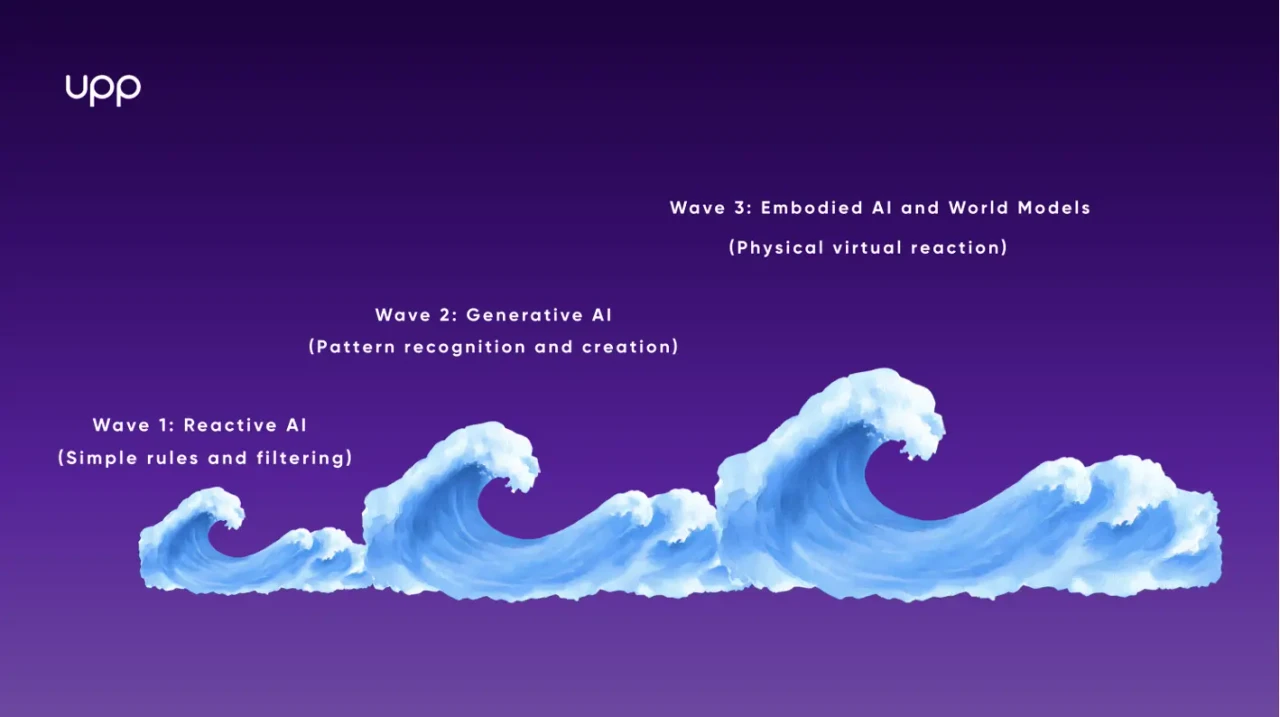
From a strategic perspective, the issue is that pure LLMs are no longer sufficient to serve as complete products in high-value settings.
There are at least four reasons for this.
1. Language does not cover all of reality
Many important enterprise problems are not merely problems of describing or answering. They are problems of acting, prioritizing, intervening, adapting, and responding to changing environments.
2. Value is shifting from model to system
In the early generative AI wave, competitive advantage could come from having a stronger model. Over time, durable value is moving toward system design: memory, tool use, workflow integration, safety boundaries, evaluation, observability, and domain-specific data.
3. Real-world tasks impose real costs for error
A chatbot that answers incorrectly may be annoying. An AI agent that acts incorrectly in a financial, operational, or security-sensitive workflow can create direct consequences. That forces AI to move from “plausible response generation” toward “responsible action.”
4. Enterprise AI requires reliability more than novelty
Organizations adopt AI because it reduces cost, accelerates operations, standardizes decisions, and performs reliably inside real processes. That requires more than good language generation. It requires integration, governance, security, and the capacity to improve from system feedback.
This is what is meant by the “inevitable obsolescence” of pure LLMs: a demotion. LLMs will remain highly important, but increasingly as infrastructure within larger systems rather than as the whole system itself.
Strategic Implications for Companies and Startups
For technology firms and enterprises developing AI strategies, the most important lesson is: do not stop at the LLM.
For enterprises
The strategic question is no longer whether an organization should use a language model. It is whether it is building AI as a chatbot or as a system that can observe, decide, and affect workflows.
That leads to more useful questions:
Is the model connected to tools, memory, proprietary data, and control mechanisms?
Can the system learn from environmental feedback, or does it merely repeat increasingly sophisticated language patterns?
Are we building an interface, or an operating layer?
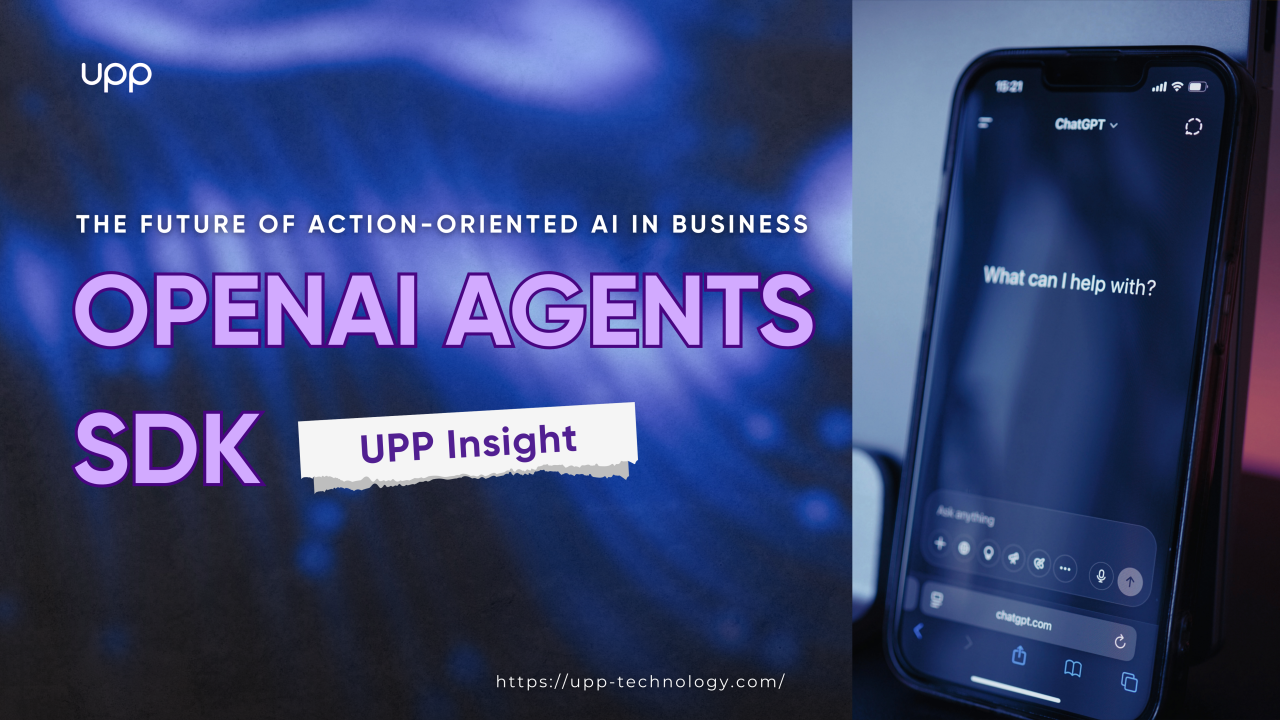
Read more: OpenAI Agents SDK and The Future of Action-Oriented AI in Business
For startups
Big Tech is often exceptionally strong at scaling from one to one hundred, but less agile at turning zero into one. The most interesting opportunities for resource-constrained startups lie in:
Designing operator systems for narrow but high-value vertical workflows
Building domain-specific environments where AI can act and learn
Creating evaluation loops and safety constraints that general-purpose systems cannot optimize as effectively
Read more: Building AI Agents for Intelligent Task Automation in Business (Part 1)
For individuals
In a world where AI becomes increasingly capable at manipulating symbols, human value will become even more tied to capacities that are difficult to compress into text alone: judgment under incomplete information, sensitivity to consequences, creativity grounded in lived experience, and the ability to construct meaning through genuine interaction with the world.
This is also why writing, making, testing, and confronting reality still matter. A model can recombine language with extraordinary fluency. But depth of thought often comes from limits, feedback, and direct exposure to what cannot be solved through language alone.
The Real Shift: From Fluent Models to Accountable Systems
The most important shift in AI today is the shift from fluent models to accountable systems.
A fluent model can speak convincingly about the world. An accountable system must act within the world, remain constrained by the world, and be judged by outcomes in the world.
Language-only systems will remain useful in many contexts. But in tasks where success depends on dynamic environments, causal structure, execution reliability, and feedback loops, pure LLMs increasingly reveal themselves as incomplete.
The near future of AI will belong to the system that can observe correctly, act correctly, and learn correctly.
Read more: What Data Pipelines do LLM systems actually need?
Tags cloud
Newsletter
DISCOVER MORE



























































![[Recap] UPP Global Technology JSC Establishing Anniversary](/homepage/news-section/new-4.webp)


































LET’S TALK...
Content delivered to your inbox


ENTER YOUR EMAIL
YOU WANT TO...


Hanoi, Vietnam
Web3 Tower, No. 15, Alley 4, Duy Tan, Cau Giay, Hanoi, Vietnam