
Top Digital Transformation Technologies for Australia 2026
Date
February 7th, 2026
Reading Time
7 mins
What's news
Australia’s digital transformation journey is entering a decisive phase. By 2026, digital technologies are no longer viewed as optional upgrades or innovation experiments. Instead, they are becoming core enablers of productivity, resilience, and long-term competitiveness across industries.
Driven by strong government direction, rising enterprise IT investment, and rapid adoption of AI and automation, Australian organisations are embedding digital capabilities deeply into their operating models. This article explores the top digital transformation technologies shaping Australia in 2026, and why they matter for business leaders today.
Digital Transformation Strategies for Australian Businesses in 2026
Australia’s digital economy is scaling rapidly. According to Gartner, national IT spending is projected to reach A$172.3 billion by 2026, as organisations prioritise cloud, AI, cybersecurity, and data-driven operations. Nearly half of Australian businesses already use AI regulaly, while large enterprises report automation adoption rates close to 60%.
At the policy level, the Australian Government’s 2026 Implementation Plan positions AI, connected services, data capability, and cyber trust as national priorities. Together, these forces are accelerating enterprise digital maturity across both public and private sectors.
Top Digital Transformation Technologies for Australia 2026
1. AI Agent and Machine Learning (AI/ML)
AI has moved from experimentation to execution in Australia. Organisations are now deploying AI to augment work, improve decision quality, and automate complex processes rather than simply reducing manual effort. This shift is driving a more pragmatic evaluation of AI initiatives, where use cases are increasingly assessed based on whether they deliver outcomes that are clearly worth IT investment, rather than on technological novelty alone.
Most of Australian jobs are estimated to have medium to high exposure to AI augmentation. Businesses are applying AI across predictive analytics, customer service automation, fraud detection, demand forecasting, and intelligent decision support.
Australia’s AI ecosystem is also strengthened by institutional investment, including industry academic collaboration through centres such as the Australian Institute for Machine Learning. By 2026, AI is firmly embedded as a foundational capability rather than a standalone initiative.
Interested in Productized AI but not sure where to begin? Explore our services here
2. Cloud Computing, Hybrid Cloud, and Multi-Cloud Strategies
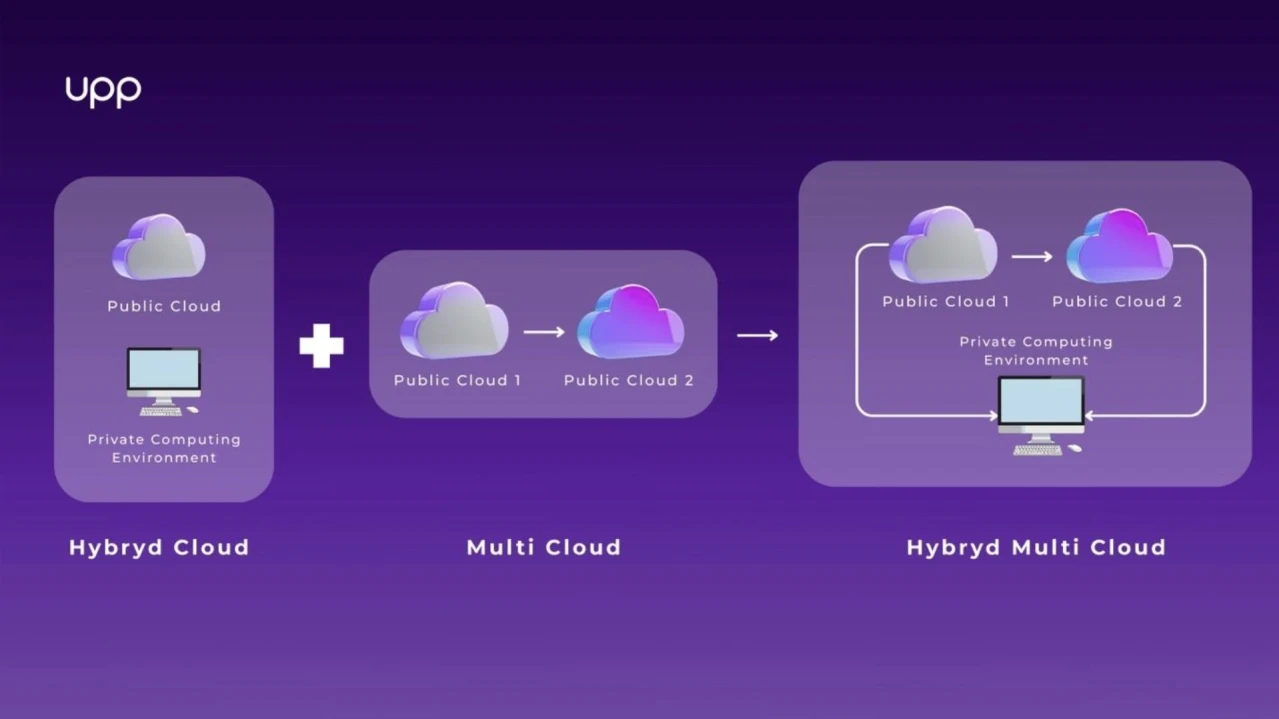
Cloud remains the backbone of digital transformation in Australia, but strategies are evolving. Rather than relying on single vendor cloud models, organisations are increasingly adopting hybrid and multi cloud architectures.
This shift supports:
-
Distributed AI workloads
-
Data sovereignty and localisation requirements
-
Greater operational resilience and vendor independence
Major infrastructure investments, including AI-focused data centres in Australia, reflect growing demand for local compute capacity. By 2026, most Australian enterprises will operate mission critical systems across hybrid cloud environments with advanced security and governance controls.
Read more about one of the most widely used cloud based CRM and application platform
3. Edge Computing and Distributed Architectures
Australia’s digital infrastructure is expanding beyond centralised cloud platforms toward edge and distributed computing models.
Edge computing enables real-time data processing closer to the source, reducing latency and improving performance. This is particularly critical for industries such as mining, logistics, utilities, agriculture, and smart infrastructure.
Cloud and edge technologies already account for a significant share of the Australia, New Zealand digital transformation market, and their role will continue to grow as organisations demand faster, more autonomous systems.
4. Automation, No-Code/Low-Code, and Intelligent Process Automation
Automation adoption in Australia is accelerating rapidly and evolving into a far more structured and strategic discipline. More than 35% of Australian businesses now deploy AI or automation tools, with large enterprises at the forefront due to their advanced digital infrastructure, higher process maturity, and greater capacity for sustained investment. Importantly, adoption is shifting away from fragmented, use case driven initiatives toward coordinated, organisation wide automation programmes aligned with long-term business objectives.
This transformation is underpinned by the growing use of Robotic Process Automation (RPA) to streamline high volume, repetitive operational activities, particularly in finance, operations, and compliance functions. Building on this foundation, organisations are increasingly adopting Intelligent Process Automation (IPA), which combines RPA with AI and advanced analytics to enable contextual decision-making, intelligent handling of unstructured data, and continuous process optimisation. In parallel, no-code and low-code platforms are gaining significant momentum, allowing business users to design and deploy internal applications and automated workflows with minimal dependence on specialised engineering resources.
Collectively, these technologies are compressing time to market, mitigating the impact of Australia’s constrained technology talent pool, and redistributing digital ownership closer to business teams. As a result, automation is no longer perceived merely as an efficiency lever, but as a critical enabler of organisational agility, scalability, and sustained competitive advantage.
5. Data Platforms, Analytics, and Data Governance
Data has become a strategic asset, and how it is governed is now as important as how it is analysed. Australian organisations are investing in modern data platforms that consistent data definitions, and enterprise-wide visibility.
Strong data governance frameworks are shifting from compliance driven oversight to decision-enabling infrastructure. Well governed data is increasingly a prerequisite for scaling AI, automation, and customer intelligence initiatives.
By 2026, organisations that treat data as a product, not a byproduct will gain a significant competitive advantage.
6. Cybersecurity and Zero Trust Architectures
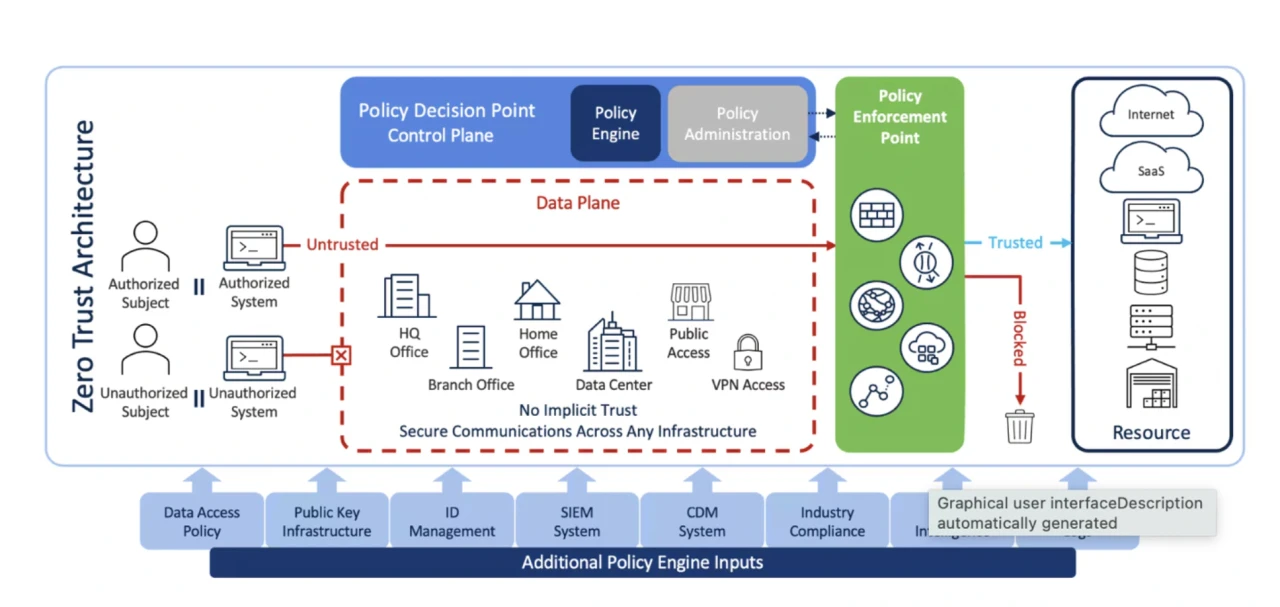
Source: Cisco
As AI adoption accelerates, cybersecurity has become a foundational pillar of transformation rather than a downstream concern.
Australian organisations are increasing investment in:
-
Zero Trust security models
-
Identity centric access controls
-
Integrated threat detection and response
-
Security by design within development lifecycles
Government policy continues to emphasise cyber trust and resilience, especially for critical infrastructure, healthcare, finance, and public services. In 2026, secure digital operations are inseparable from transformation success.
7. Modern Operating Models: DevOps, Agile, and AIOps
Technology transformation is tightly linked to how organisations operate. Australian enterprises are embedding DevOps and Agile practices into everyday workflows to improve delivery speed, collaboration, and quality.
At the operational level, AIOps is gaining traction. By applying analytics and machine learning to IT operations, organisations can automate incident detection, anomaly resolution, and system optimisation, improving reliability while reducing operational overhead.
Aligning IT Investment with Digital Transformation Goals in Australia
Significant challenges persist across the Australian market. A projected digital skills gap of approximately 370,000 workers by 2026 continues to constrain adoption, with the most shortages in AI, cybersecurity, and data related capabilities. At the same time, many organisations remain constrained by legacy systems that were not designed for modern integration or scalable automation, creating technical debt that slows transformation and increases operational risk.
Rising cybersecurity threats and the escalating costs of large scale transformation initiatives further complicate automation and AI adoption. For many organisations, these pressures are compounded by uncertainty around return on investment and uneven levels of organisational readiness, particularly when automation programs are expanded beyond pilot projects into enterprise-wide deployments. As a result, initiatives often struggle to demonstrate clear business value at scale.
Addressing these challenges requires more than increased technology spending. Organisations must take a disciplined, strategic approach that prioritises high impact use cases, invests in workforce upskilling and capability development, and establishes strong governance structures to ensure consistent execution, risk management, and measurable outcomes across transformation programmes.
What Comes After 2026?
Looking beyond 2026, the direction of digital transformation in Australia will be shaped less by speed and experimentation, and more by control, resilience, and durability. Questions around who owns data, where it is stored, and how critical digital capabilities are governed will move to the centre of national and organisational agendas. As a result, sovereign AI initiatives and localised data management practices are likely to gain wider adoption, driven by security concerns, regulatory expectations, and the strategic value of data to the Australian economy.
Infrastructure choices will also evolve as digital services become more distributed by design. Rather than relying primarily on centralised systems, organisations will increasingly deploy edge oriented architectures to support real time processing, lower latency requirements, and decentralised service delivery. This architectural shift supports greater flexibility and reduces exposure to single points of failure, while also enabling new classes of digital applications across industries.
Alongside these technical changes, the role of government will remain influential. Ongoing public sector digital reform will continue to set benchmarks for security, interoperability, and service quality, shaping expectations across the broader ecosystem. Taken together, these developments point to a long term transformation model focused not on short term efficiency gains, but on autonomy, systemic resilience, and the sustainable development of Australia’s digital capabilities.
Conclusion
By 2026, digital transformation in Australia is defined by execution, not experimentation. AI, cloud, automation, data platforms, and cybersecurity are becoming deeply embedded across industries, reshaping how organisations operate, compete, and serve customers.
The organisations that succeed will be those that combine modern technologies with strong data foundations, secure architectures, and adaptive operating models, turning digital transformation into a durable strategic advantage.
Newsletter
DISCOVER MORE





























































![[Recap] UPP Global Technology JSC Establishing Anniversary](/homepage/news-section/new-4.webp)











































LET’S TALK...
Content delivered to your inbox


ENTER YOUR EMAIL
YOU WANT TO...


Hanoi, Vietnam
Web3 Tower, No. 15, Alley 4, Duy Tan, Cau Giay, Hanoi, Vietnam